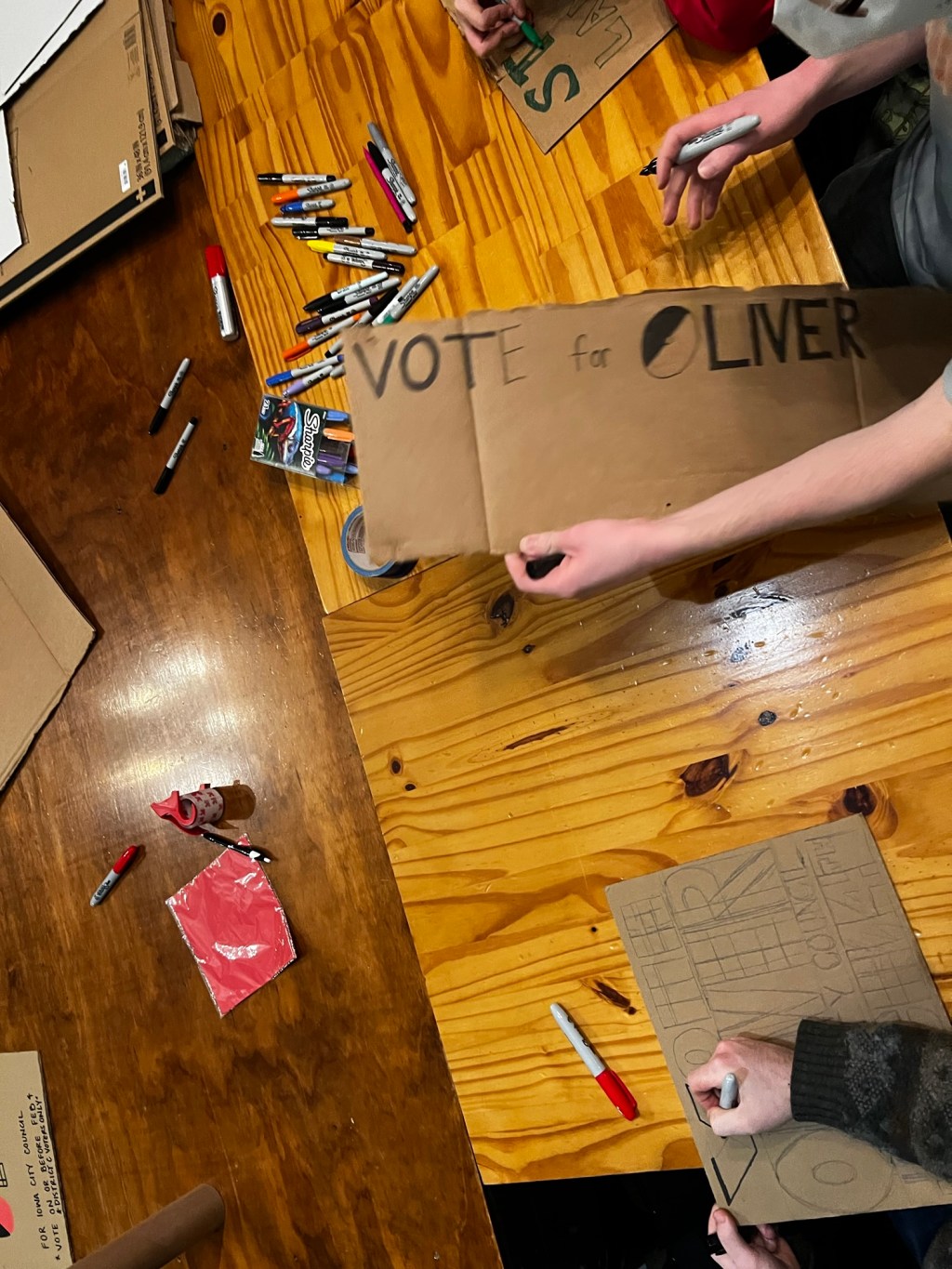
Tonight, Iowa City elected Oliver Weilein to serve out the remaining two-and-a-half years of a city council seat. Weilein has been pretty loud about his stance on public safety, to the point that his tweets in support of Iowa City’s 2020 protests (and images of burning cop cars) became a part of the anti-Oliver campaign.
His election is a third example of what I noted here last year following election wins by Laura Bergus and Mandi Remington:
Certainly, electoral politics are blunt instruments (you can really only pick folks on the ballot and, unless you’re on the ballot, their politics won’t perfectly align with your own), but it should tell leaders something about what people actually want to see happen when these candidates are winning elections.
[…]
What these candidates are actually advocating for is, at a time when crime and arrests rates are declining locally, investments in alternatives to police that prevent crime, address causes of harm and build a system of emergency response to eventually replace police.
Two elections doesn’t make a rule, but local policy makers should heed the message of voters: we want leaders who will ask questions about policing, turn down the money spigot and push for alternatives.
Still, with establishment Democrats lined up behind Weilein’s opponent (who outspent Weilein 10 to 1 according to campaign finance filings), he won the seat with a 20-point margin.
The lesson: being skeptical of policing isn’t disqualifying. In fact, voters keep voting for people who are willing to say we stop shoveling more money into policing, suggesting it’s what they want.
Two doesn’t make a rule, but three does suggest a trend.
 Abolition: Yes!