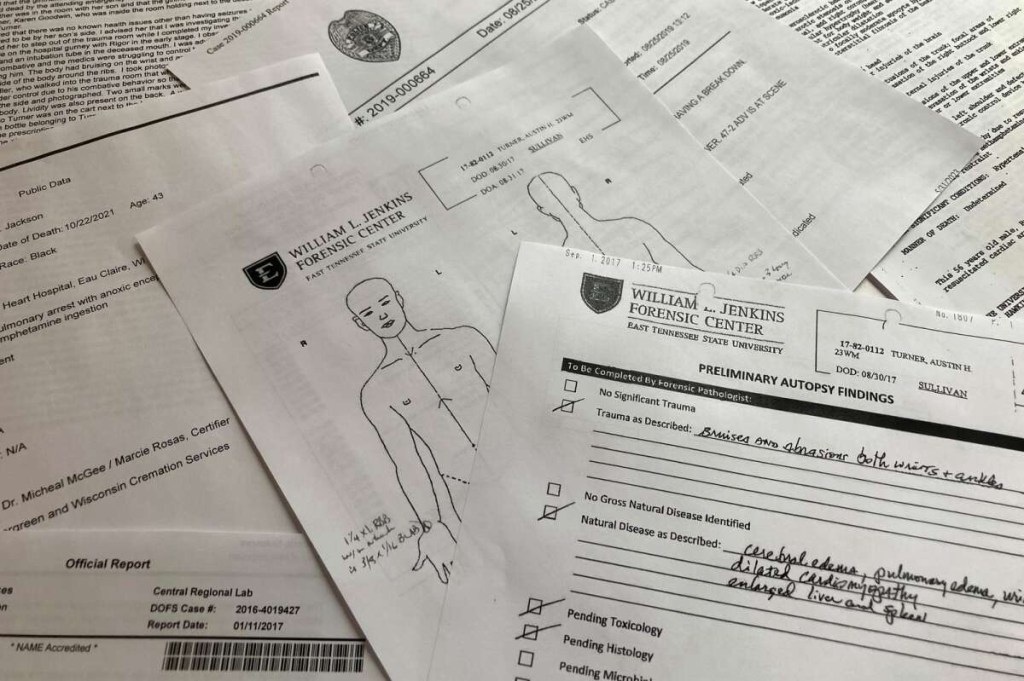
The Associated Press, including local bureau reporter Ryan Foley, working with the Howard Center for Investigative Journalism programs at the University of Maryland and Arizona State University and PBS’s Frontline, investigated hundreds deaths at the hands of police, documenting the ways these deaths are obscured from the public and the difficulty of holding police accountable in anyway.
Over a decade, more than 1,000 people died after police subdued them through means not intended to be lethal, an investigation led by The Associated Press found. In hundreds of cases, officers weren’t taught or didn’t follow best safety practices for physical force and weapons, creating a recipe for death.
These sorts of deadly encounters happened just about everywhere, according to an analysis of a database AP created. Big cities, suburbs and rural America. Red states and blue states. Restaurants, assisted-living centers and, most commonly, in or near the homes of those who died. The deceased came from all walks of life — a poet, a nurse, a saxophone player in a mariachi band, a truck driver, a sales director, a rodeo clown and even a few off-duty law enforcement officers.
This is probably an undercount, and none of this should be surprising.
The deaths are disproportionately of people who are Black or mentally ill, which also shouldn’t be surprising.
We can have better training and clearer standards and police will still kill people they interact with. “The only way to get down to zero is to get rid of policing,” said Peter Moskos, a professor at John Jay College of Criminal Justice and former Baltimore police officer.
Police leaders, officers and experts say law enforcement shouldn’t bear all the blame. As the social safety net frays, people under mental distress or who use stimulant drugs like cocaine or methamphetamine are increasingly on the streets. Officers sent to handle these emergencies are often poorly trained by their departments.
These police leaders, officers and experts make the argument for us: shifting funds from police to social services and alternative safety services is necessary to reduce violence and death at the hands of police.
 Abolition: Yes!